
New Well Drilling Services in Newaygo County and all of West Michigan
We drill two-inch through eight-inch residential, agricultural, and commercial wells. While most residential wells are five inch diameter, we assess your demand and size the well to meet your needs.
What Happens Before, During, and After We Drill Your Well
Knowing what to expect makes the whole process easier. Here's how a new well installation typically unfolds from the first site visit through final water testing.
1. Site Assessment and Well Location
We visit the property to evaluate the land, check setback requirements from septic systems and property lines, and identify the best drill location based on geology and local aquifer data.
2. Drilling and Casing Installation
We drill down through the soil using our rotary drilling rig until we reach a productive aquifer. Well casing is then set in the borehole to prevent collapse and surface water intrusion.
3. Well Development and Yield Testing
Once drilled, we develop the well to clear drilling debris and run a yield test to confirm the well produces enough water for the intended use, whether residential, agricultural, or commercial.
4. Grouting
A bentonite grout seal is placed around the casing from the surface down to protect the well from contamination. This step is required by Michigan state code and is non-negotiable for long-term water quality.
5. Hook-up
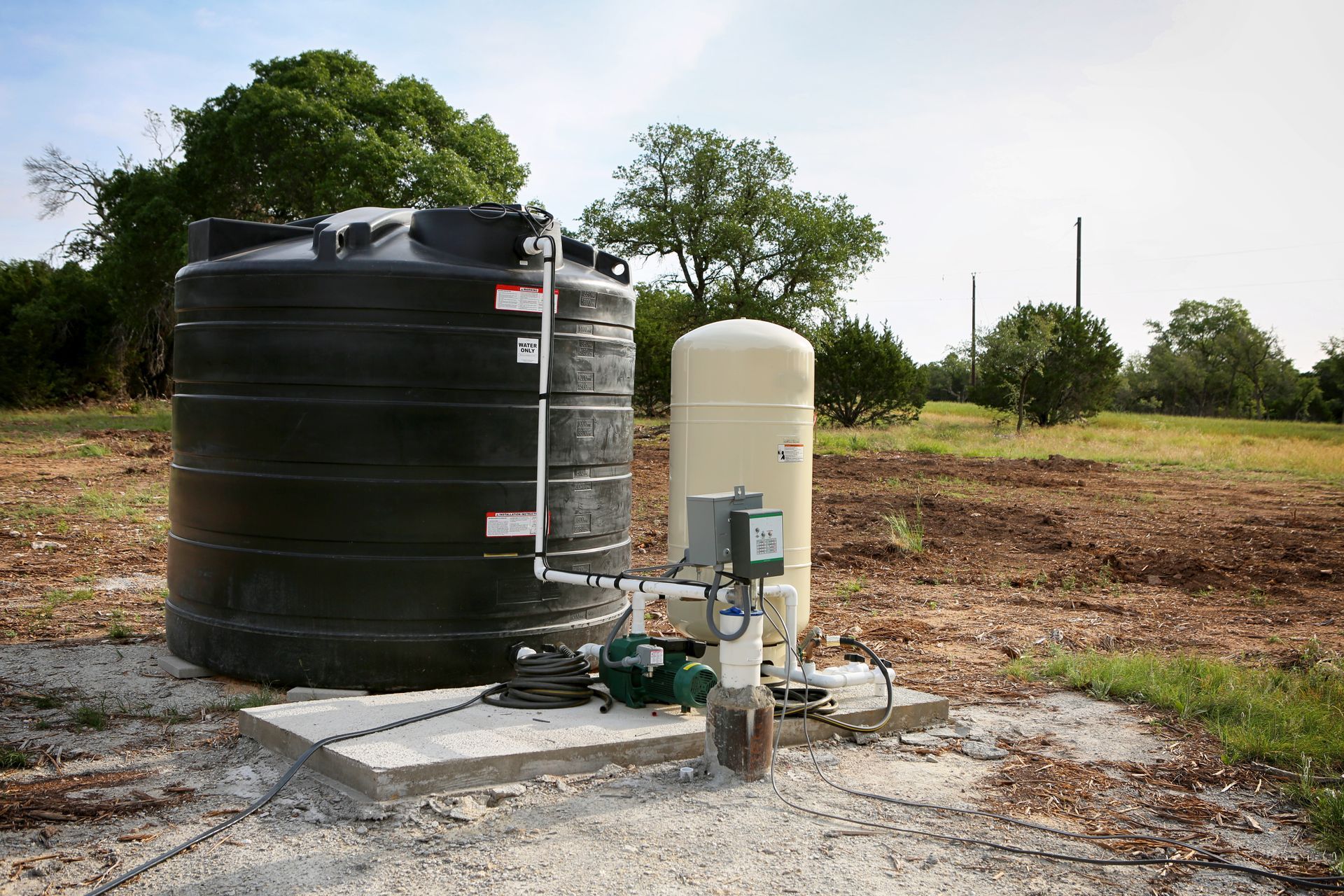
After the well is drilled, next step is to get water connected and flowing to where you need it.
During this step, the pump, water line and pressure tank are installed and connected ready for use.
6. Water Quality Testing
We recommend water sampling before any well is put into service. Testing screens for bacteria, nitrates, and other contaminants common to the groundwater. Results determine whether treatment equipment is needed.
Residential, Agricultural, and Commercial Wells
The type of well you need depends on how you'll use the water and how much of it you need. Depth and casing specifications also vary based on the soil profile and aquifer conditions beneath your specific property.
Residential Wells for Rural Homes and Cabins
Most homes sit outside municipal water service areas, which makes a privately drilled well the only practical option. Residential wells in this region typically range from 60 to over 200 feet deep depending on local geology. We size the well and pump to match the household's daily demand.
Agricultural Wells for Livestock and Irrigation
Farms, orchards, and nurseries need higher-volume wells that can sustain extended draw periods without recovery issues. We assess your water demand upfront and drill to a depth and diameter that supports your operation reliably through dry seasons.
Commercial and Light Industrial Wells
Businesses, campgrounds, rental properties, and light industrial sites all have water needs that exceed what a standard residential well is designed to handle. We evaluate flow requirements before drilling and select casing diameter and pump specifications accordingly.
Why Property Owners Choose Us for New Wells
We've been drilling wells for generations. That kind of local history means we know the geology, the county permit process, and what it takes to get a well that performs for decades, not just for the first inspection.
Deep Knowledge of Geology
We've drilled hundreds of wells across the county and know where the productive aquifers are located, what soil layers to expect, and which areas pose drilling challenges. That local knowledge reduces surprises and keeps your project on schedule.
Licensed, Code-Compliant Drilling on Every Job
Every well we drill meets Michigan Department of Environment, Great Lakes, and Energy (EGLE) standards. We pull the required permits, follow grouting and setback rules, and submit the required well completion report with no shortcuts and no exceptions.
Honest Assessment Before We Drill
We won't drill a well in a location that's going to cause problems down the road. If the site has issues with setbacks, access, or geology, we'll tell you upfront rather than let you find out after the bill is paid.
Common Questions About New Well Drilling
How Deep Does a New Well Need To Be?
Most new wells range from 60 to more than 200 feet deep, depending on where the productive aquifer sits beneath your specific property. We assess local geology before drilling to reach a water-bearing zone that meets your household or business demand reliably year-round.
How Long Does It Take To Drill a New Residential Well?
Drilling a residential well typically takes one to two days on site, not counting the permit process. Site conditions, depth, and soil layers affect the timeline. We'll give you a realistic estimate before we schedule the job so you're not left waiting for information.
Do I Need a Permit to Have a Well Drilled?
Yes. Michigan requires a well permit before drilling begins. We handle the permit application with the county health department as part of our process. The permit ensures the well location meets setback requirements from septic systems and property lines under state code.
Does a New Well Need to Be Tested for Water Quality?
Michigan recommends water quality testing before a new well is put into regular use. We advise every customer to test for bacteria, nitrates, and other contaminants that are common in groundwater. Test results determine whether any treatment equipment is needed before the water is safe to drink.
Ready to Get a New Well Drilled on Your Property?
We serve residential, agricultural, and commercial properties. Whether you're building a new home, expanding a farm operation, or replacing a failed well, we'll walk you through the options before any work begins. Get in touch to schedule a site visit or ask us about pricing.